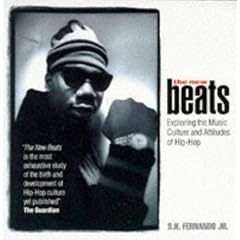
er hat das buch unter seinem namen S.H. Fernando rausgebracht.
nee ich glaub eigentlich nicht , dass das ne einzige lobeshymne an die anfänge is, allein schon weils ja schon aus der perspektive der ganz frühen 90er geschrieben ist..
das hier sind die reviews bei amazon.com , dort kann man das buch auch gebraucht für n appel & 1 ei kaufen, bei amazon.de leider nicht...
http://www.amazon.com/gp/offer-listing/ ... 46-6708800
From Publishers Weekly
Like the culture it chronicles, The New Beats contains a rapid-fire series of quick changes of tone and attitude. A chapter on rap's early days, when DJs showed their mix tricks at big Bronx street parties, jumps from the Jamaican patois of rap pioneer DJ Kool Herc to the scene at upper Manhattan dance clubs, all without missing a beat. Fernando, a frequent contributor to hip-hop magazine the Source, relates a rich history so current and alive, it seems to come off the paper. The reader learns about rap's forbearers, Jamaican reggae and 1970s funk; how rap lyrics, so fascinated with crime, have antecedents in the African folk hero Anansi the Spider and the fictional New Orleans outlaw Stack-a-Lee; and why rap music has been referred to as "the black CNN." With a mix of in-your-face journalism (the author traverses dangerous territory with Los Angeles gang members), and a knack for communicating musical sound through the written word (James Brown's voice is "thicker and juicier than prime rib slathered with extra gravy"), Fernando has created a fast-paced oral history that will prove important even when the dust settles from this still-developing form. Photos. QPB selection.
Copyright 1994 Reed Business Information, Inc.
From Library Journal
Using material from the many interviews that he conducted, Fernando has written an excellent social history of hip-hop culture (covering break dancing, fashion, language, and a graffitied visual art) and rap music (tracing the genre's Jamaican and funk musical roots). He also discusses the prominence of gangs in most urban areas and the music's unique expression of contemporary urban experience. Fernando outlines the role of rap as a chronicle for youth culture and uses examples to demonstrate the pleas of many rappers for a more humane, cooperative, less violent, Afrocentric community. The author concludes each chapter with a list of essential recordings. A frequent contributor to The Source, the oldest rap-music magazine, Fernando offers an excellent study, which will serve as a valuable companion to David Toop's path-breaking Rap Attack 2 (Serpent's Tail, 1992). Highly recommended to anyone interested in today's music or youth culture and indispensable to music and social history collections.
David Szatmary, Univ. of Washington, Seattle
Copyright 1994 Reed Business Information, Inc.
From Booklist
Ubiquitous in today's pop-culture landscape, rap was born in New York sometime in the 1970s. Fernando clearly delineates the genre's roots in funk and dub reggae and provides a number of interviews with important contributors from all facets of its present spectrum. He clearly understands the social forces surrounding the creation of the music as well as the techniques of record production. "The unsung hero of hip-hop is the studio engineer," he says, then commendably goes beyond the typical critic's concentration on the impact of the lead MC's rapping style and inflammatory lyrics. His shortcomings are his occasional flights of self-importance and the short shrift he gives to such important groups as Arrested Development. Still, this is an ideal starting point for learning about hip-hop. Aaron Cohen
From Kirkus Reviews
A respectful tribute to the controversial and important musical form hip-hop from Fernando, a writer for The Source magazine. Stitched together with youthful enthusiasm from journalistic accounts, textual research, interviews, and song lyrics, the book gives basic information for uninitiated readers as well as rich material for devotees, and responds to hip-hop's critics. Fernando covers a lot of ground--from Jamaican ``toasting,'' a precursor of modern-day rapping, to the birth of deejaying and rapping in the Bronx--as he explores hip-hop's economic, political, and cultural context: urban poverty, drugs, racism, media controversy. Overall, Fernando thinks, ``America now stands in the midst of a renaissance of black culture, propelled to a large degree by the energy of hip- hop.'' He credits the music with raising black consciousness, spurring community activism, and giving young black men from the streets a legitimate way to make a living. Fernando defines basics like ``scratching'' (a technique of manually moving the record with the needle in the groove to create a scratching noise), then goes into greater depth, for instance, explaining that the now-standard technique was pioneered by a 13-year-old working with Grandmaster Flash. However, the author's focus is limited and lopsided. A self- described purist, he prefers ``authentic'' hip-hop to ``co-opted'' or ``mainstream'' music not aimed at the ``core audience'' of urban black males; thus he discusses at length rapper KRS-ONE and the group EPMD as well as Public Enemy and NWA. But Fernando ducks many tough questions about the machinations behind the huge and profitable business of turning these groups' messages into mass- market products. Also missing almost completely are jazz-influenced and more intellectually oriented hip-hop, female rappers, and any group or artist not from California or the East Coast. A commendable effort, but lacking in perspective, offering more insider tidbits and accolades than analysis. (50 b&w photographs, not seen) -- Copyright ©1994, Kirkus Associates, LP. All rights reserved.
Review
"Our brother S.H. Fernando Jr. has done a superb, knowledgeable job on the topic of hip-hop culture... The New Beats is one of the great hip-hop books of the '90s."--Afrika Bambaataa, Universal Zulu Nation.
Review
"Our brother S.H. Fernando Jr. has done a superb, knowledgeable job on the topic of hip-hop culture... The New Beats is one of the great hip-hop books of the '90s."--Afrika Bambaataa, Universal Zulu Nation.
Book Description
The first full-scale history and analysis of hip-hop, the most influential pop music since rock 'n' roll. Fernando illuminates how an exuberant form of dance music became simultaneously an expression of social and political protest, black nationalism, and cultural pride.
From the Publisher
The first full-scale history and analysis of hip-hop, the most influential pop music since rock 'n' roll. Fernando illuminates how an exuberant form of dance music became simultaneously an expression of social and political protest, black nationalism, and cultural pride.
"Our brother S.H. Fernando Jr. has done a superb, knowledgeable job on the topic of hip-hop culture... The New Beats is one of the great hip-hop books of the '90s."--Afrika Bambaataa, Universal Zulu Nation.
Inside Flap Copy
The first full-scale history and analysis of hip-hop, the most influential pop music since rock 'n' roll. Fernando illuminates how an exuberant form of dance music became simultaneously an expression of social and political protest, black nationalism, and cultural pride.
From the Back Cover
"Our brother S.H. Fernando Jr. has done a superb, knowledgeable job on the topic of hip-hop culture... The New Beats is one of the great hip-hop books of the '90s."--Afrika Bambaataa, Universal Zulu Nation.

 Anmelden
 FAQ
FAQ Suche
Suche




 . Zudem wurde mir durch dein Paket zur schmerzhaften Gewissheit, dass ich dein Paket immer noch nicht auf den Weg gebracht habe
  . Morgen morgen nur nicht heute... Aber wirklich...






 Die Word Sound Releases habe ich definitiv nicht mehr, ich hab die ganze Wohnung durchsucht und nichts gefunden...
  Hab die wohl mal in einem 2nd Hand Store vertickt und das dann vergessen, aber wenn du willst kann ich mal schauen ob sie die noch da haben wenn ich dort wieder vorbei komme, kauft doch sowieso kein Schwein...